
Chippewa County Sex Offender Checks
The Michigan Public Sex Offender Registry, or PSOR, is the main public search channel for Chippewa County. Michigan State Police manages it. PSOR is only the public part of a larger law-enforcement registry. It can return published records by name, registration number, MDOC number, county, city, ZIP code, street area, or map radius. It also offers lists for published registrants, incarcerated registrants, and people shown as non-compliant. The search is free. A county filter gives the broad local view, while a street and radius search focuses on a smaller area.
Use the Chippewa County Sheriff or another authorized local law-enforcement office when the question concerns registration, an appointment, or a suspected reporting breach. For activity in more than one state, the U.S. Department of Justice national search adds a separate cross-jurisdiction layer. Each channel has a distinct role. PSOR displays Michigan public data, the Sheriff handles local registration contacts, and the national tool queries participating jurisdictions. None should be read as a prediction of conduct.
The Michigan State Police registry guidance explains the scope, status labels, search tools, and reporting duties behind PSOR.
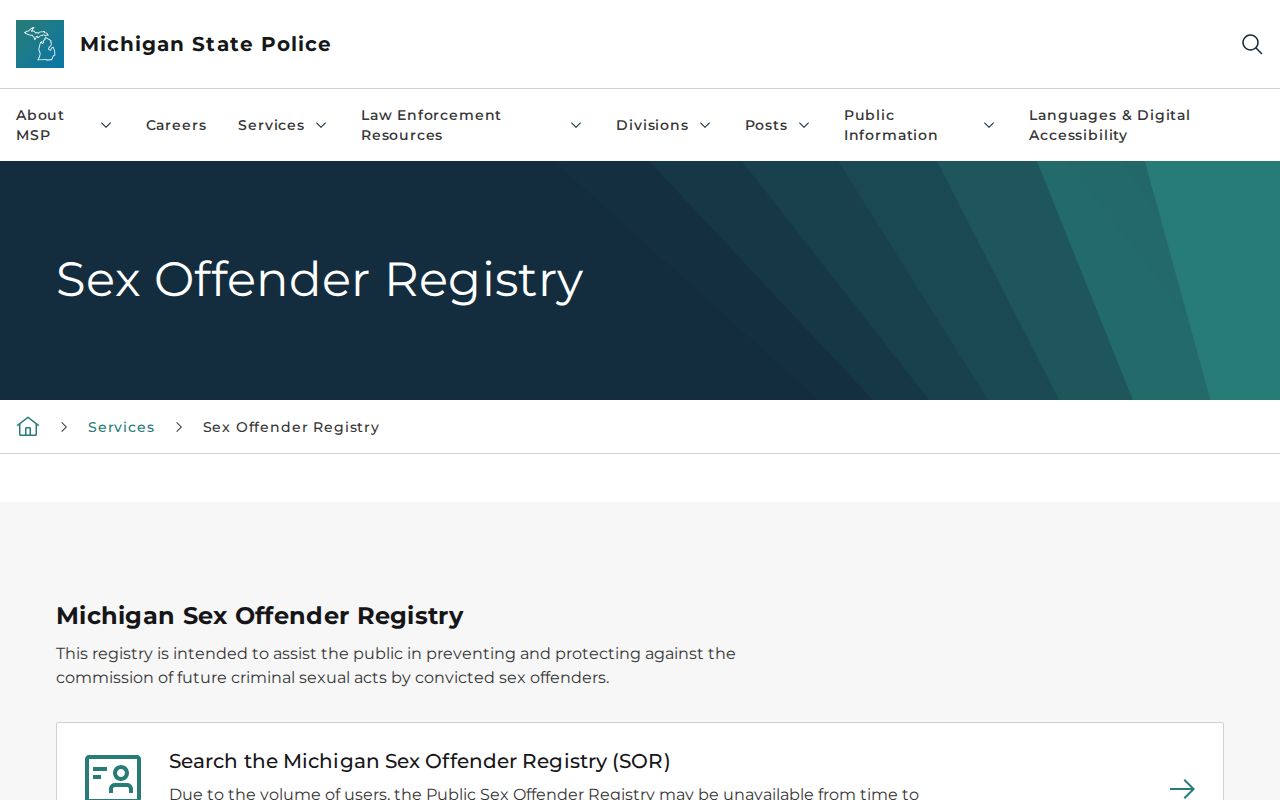
That guidance is the best source for interpreting a Chippewa County registry result instead of relying on the search screen alone.
Chippewa Registry Radius Map
PSOR supports a neighborhood search around an address. Enter a street location with a city, county, or ZIP code, then choose a radius of .25, .50, 1, 2, or 5 miles. The map and list are two views of the same published data. A narrow radius may help with one block or facility. A wider radius may be more useful where homes and roads are spread out across Chippewa County. Location results still depend on the address reported to the registry and the map system’s ability to place it.
An address may appear in a text result yet fail to produce a map marker. MSP states that an unmapped address disables the “Map Offender” option. Try the list view, check the spelling and geographic fields, or broaden the search. Do not conclude that an empty map means an empty registry. PSOR can also be intermittently unavailable when traffic is high. Return later rather than substituting an unofficial people-search or map service.
Note: Individual PSOR pages can be printed, but Michigan State Police says the complete published list is not available as a download.
Michigan Public Sex Offender Registry (PSOR) Searches
Start at the official PSOR search and choose the field set that fits what is known. A name search accepts partial first and last names. An identifier search can use a registration number or MDOC number. A geographic search can use Chippewa County, a city, ZIP code, or a street location. Read the conditions of use before opening any result. A close name or nearby address is not enough to identify someone without comparing the available photo, aliases, date of birth, physical details, and registration data.
- Open the official PSOR interface and review its conditions of use.
- Choose a name, official identifier, county, address, ZIP, or radius search. Select Chippewa for a countywide result.
- Review the list or map, then compare identifiers before selecting a profile.
- Open the profile and read its status, registration details, offense data, address fields, and update information together.
The official Michigan PSOR interface shows the current search controls used for Chippewa County registry lookups.
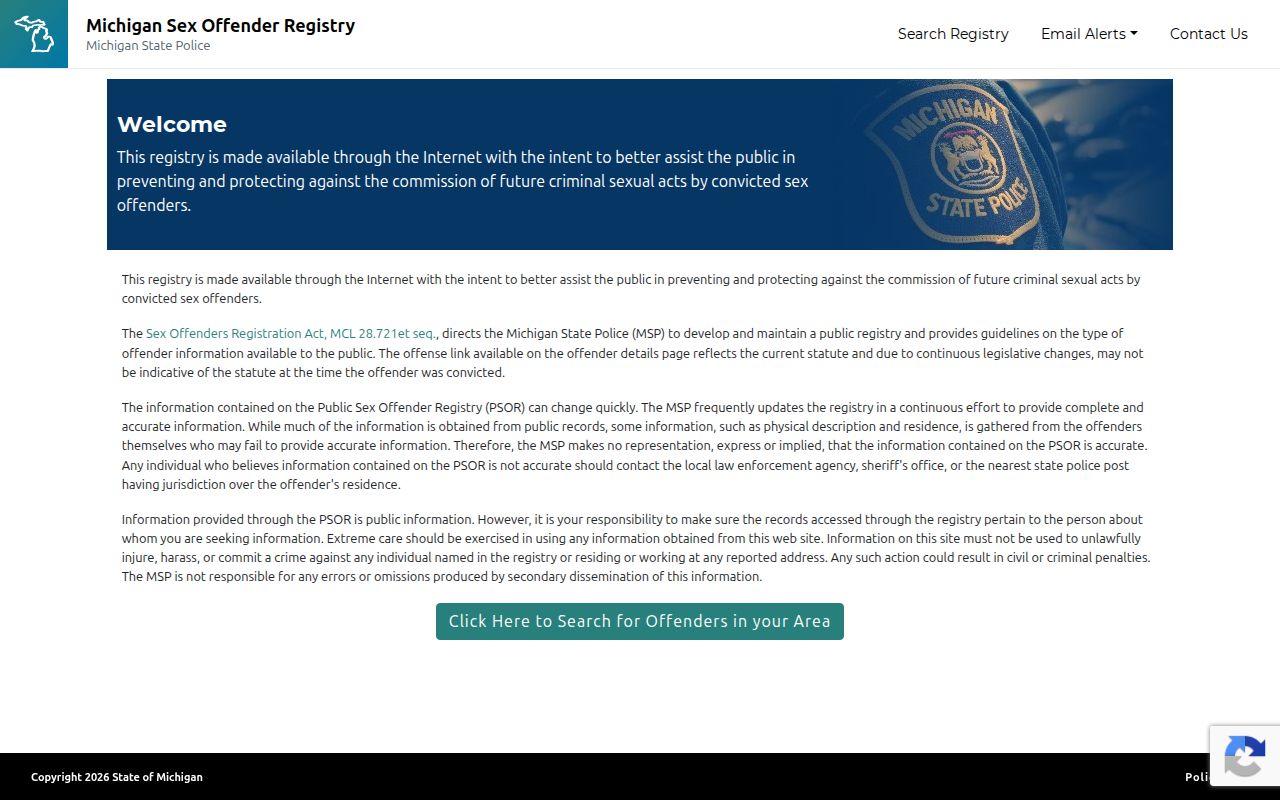
The interface supports both precise identifier work and broader community-area searches without exposing a private third-party database.
| Field Label | Type | Required | Options or Format |
|---|---|---|---|
| First and last name | Text | Together for name search | Partial names accepted |
| Registration or MDOC number | Text | Alternative | Use either official identifier |
| Street address | Text | Conditional | Pair with city, county, or ZIP |
| City, county, ZIP | Text or select | Optional | Select Chippewa for the county view |
| Radius | Dropdown | For map search | .25, .50, 1, 2, or 5 miles |
| Published status lists | Link or button | Optional | All, incarcerated, or non-compliant |
Why Chippewa Listings May Be Absent
A prior sex conviction does not always result in a current public PSOR entry. MSP identifies several possible reasons. A person may live outside Michigan, be deceased, have a juvenile adjudication, or have been convicted of an offense that is not publicly listed. Older timing rules also matter. Other exclusions can involve court removal, a set-aside, treatment under the Holmes Youthful Trainee Act, an expired registration term, or certain cases with a single adult victim. These are legal and status distinctions. An empty search is not proof that no prior sex conviction exists.
The reverse caution matters too. A published address or registration record does not show present conduct, and it does not establish that a new crime occurred. PSOR answers a narrow question: what registration information Michigan law currently permits the public system to show. A conviction’s pleadings, judgment, and sentence remain court records. Where a case outcome must be understood, use the Chippewa County Court Case Lookup and confirm the file with the court that entered the judgment.
Registry Profiles: What They Show
A PSOR profile combines identifying details with registration and offense information. MSP’s official field inventory includes name, aliases, date of birth, registration number, photograph, scars, marks, tattoos, offense information, address, campus data, employment data, vehicle information, and current status. These fields help distinguish people with similar names and explain why a record appears in a particular search. Victim information is never released through PSOR. That boundary protects victims while still publishing the fields authorized for public safety.
The public database itself exists under MCL 28.728c, which identifies information permitted in Michigan’s internet registry.
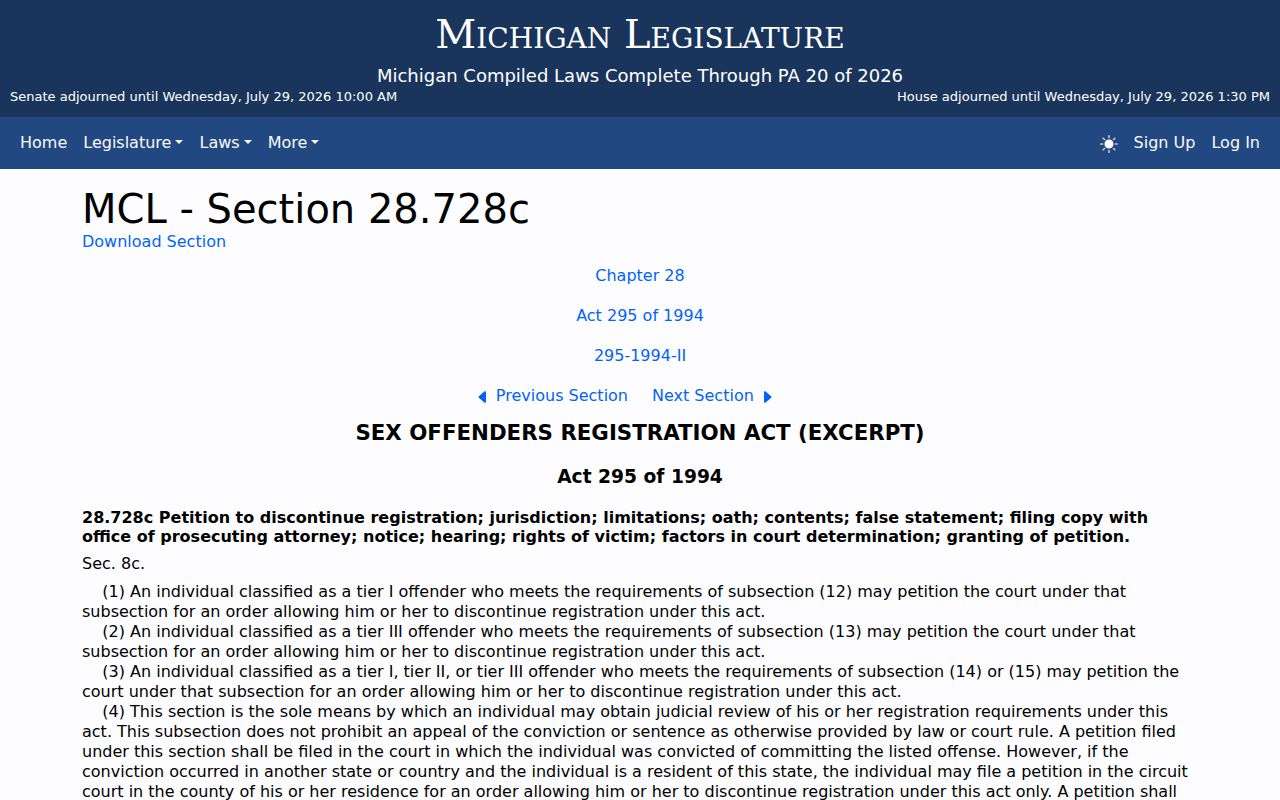
The statute helps explain why a Chippewa County profile is a defined public record rather than a complete criminal-history report.
| Name and aliases | Published names used to help distinguish the registrant from people with similar names. |
|---|---|
| Photo and description | Photograph, date of birth, physical details, and listed scars, marks, or tattoos. |
| Address and activity | Published residence plus campus, employment, and vehicle information when shown. |
| Offense information | The listed offense and related statutory details, without victim information. |
| Registration details | Registration number, tier-related data, and the reporting information made public. |
| Status | Labels such as Active, Incarcerated, Absconder, Homeless, School Only, or an out-of-state status. |
Track Chippewa Registry Changes
PSOR’s “Track Offender” feature sends notice of reported changes. Open a published profile, choose the tracking option, enter the same email address twice, accept the Terms of Use, and register. MSP says a confirmation should arrive within 24 hours. Once confirmed, the alerts can cover changes in the person’s reported home, employment, or school information. Tracking is tied to a selected registry profile, so it differs from a general county or radius search.
An alert signals a registry update. It does not prove danger or unlawful conduct. Reopen the official profile and read the new field in context. If an update raises a safety concern, use law enforcement or emergency channels as the facts require. Never confront the registrant. Tracking works best as one part of a practical plan that also includes current PSOR searches and ordinary safety steps.
Registration Levels and Duties in Michigan
Michigan uses three statutory tiers. Tier I generally runs for 15 years, Tier II for 25 years, and Tier III for life, subject to the governing law. Verification is annual, semiannual, or quarterly by tier. MSP publishes detailed schedules that use a person’s birth month to set reporting months. Do not guess a tier from a plain-language offense label. The listed offense and statute control, and individual legal circumstances can affect the result.
Changes in residence, employment, name, or enrollment in higher education generally must be reported in person within three business days. Certain lodging, vehicle, and telephone changes may be reported through allowed channels. MSP also states a one-time $50 initial registration fee and a $50 annual fee until the payments reach a $550 maximum. These duties are separate from the public’s right to search. Registrants should confirm their own exact schedule and accepted reporting method with the authorized office.
The Michigan Sex Offenders Registration Act supplies the legal framework for tier and reporting duties.
Reading the Act with MSP’s practical instructions keeps the statutory rule and the day-to-day reporting schedule in the same view.
| Tier | General Duration | Verification Pattern |
|---|---|---|
| Tier I | 15 years, subject to statutory rules | Annual |
| Tier II | 25 years | Semiannual |
| Tier III | Life | Quarterly |
Chippewa Registry Status Terms
Status labels describe the record’s registry posture. They should not be turned into assumptions about a person’s conduct. “Active” means the public registration is active. “Incarcerated” identifies custody status. “Absconder” and “non-compliant” are registry terms that call for law-enforcement handling, not public action. “Homeless” reflects the reported residence status. School Only and Employment Only can explain why Michigan displays a profile even when the home residence is elsewhere.
- Pending Out of State
- A status tied to an expected or developing out-of-state change.
- Inactive Out of State
- A registry status showing that the person is no longer active in Michigan for residence purposes.
- Absconder
- A law-enforcement status that should be reported through official channels, without confrontation.
- School Only or Employment Only
- A limited Michigan connection based on reported school or work activity.
Note: Status, address, and tier fields should be read together because any single label can leave out the context needed for a safe conclusion.
Chippewa County Registration Channel
The Chippewa County Sheriff is the documented local registration contact. The office is at 325 Court Street in Sault Ste. Marie and can be reached at 906-635-6355. An authorized local law-enforcement office or Michigan State Police post may also handle qualifying registry business. Call first. Confirm the correct counter, whether an appointment is required, what identification or documents to bring, and which reporting methods apply to the specific change.
Suspected noncompliance should go to local law enforcement or MSP. Give the observed facts, location, time, and the specific profile or conduct that caused concern. Do not investigate, follow, message, or approach anyone. For an urgent threat, use 911. For a non-urgent registry concern, use the regular law-enforcement channel and let trained staff compare the report with nonpublic registration data.
Chippewa County Sheriff
325 Court Street
Sault Ste. Marie, Michigan
906-635-6355
Call to confirm the registration counter and appointment.
Chippewa PSOR and NSOPW Searches
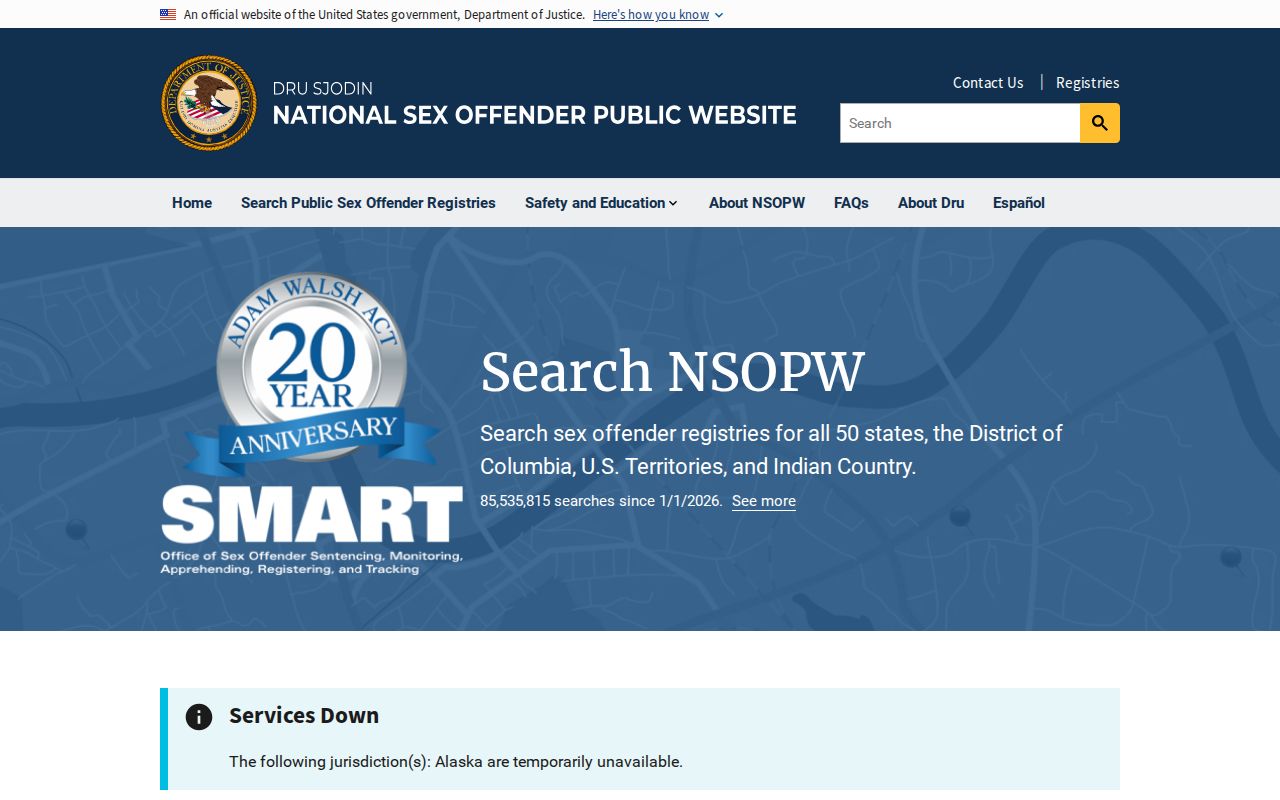
Chippewa County sits at an international border, while registry duties and public systems are organized by jurisdiction. Michigan PSOR is the most direct source for published Michigan records. The National Sex Offender Public Website, or NSOPW, searches participating U.S. jurisdictions through one federal interface. It is useful when a person has moved between states or when a safety check should extend beyond Chippewa County. NSOPW does not replace a jurisdiction’s source profile. Open the linked state or territory record when details differ or need confirmation.
The official NSOPW interface provides the national layer for a Chippewa County sex offender search that crosses state lines.
This second search is especially useful for U.S. moves, but Canadian records and rules remain outside the U.S. national registry system.
Using Registry Information Lawfully
Michigan publishes PSOR information for prevention, protection, and community awareness. The record can inform personal and family safety plans. It cannot establish what a person is doing now. An address may be old, unmapped, or linked to a limited status. An absent name may reflect a lawful public-display exclusion. Verify material changes through PSOR or law enforcement, and do not spread an unconfirmed claim.
Victim information stays out of PSOR. That protection should carry into any discussion of a record. Avoid trying to identify a victim from an offense description, court detail, or personal relationship. The safest use is narrow: read the official fields, plan reasonable safeguards, subscribe to official updates when useful, and report a concrete concern to the proper agency.
Misuse can lead to criminal consequences: The Michigan Sex Offenders Registration Act, MCL 28.721 et seq., authorizes registry publication for safety. It does not authorize harassment, threats, intimidation, vigilantism, or any crime against a registrant or household. Report concerns to law enforcement instead.